
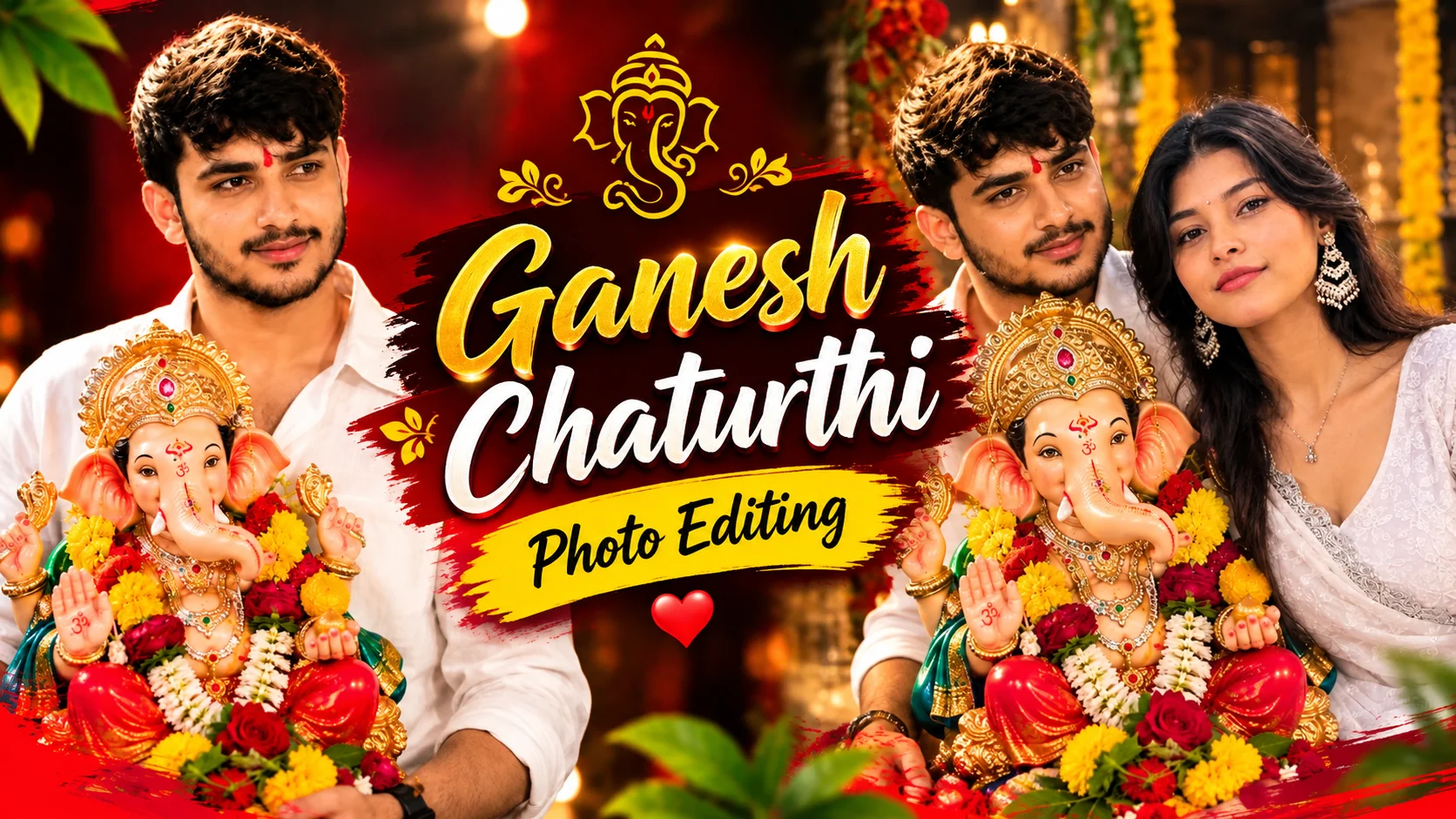
Ganesh Chaturthi photographs often combine devotion, traditional clothing, flowers, jewellery, festive decorations, and warm lighting. With AI photo editing, an ordinary reference portrait can be transformed into a more elaborate devotional scene while keeping the person recognizable.
A strong festive edit should still feel photographic. Natural facial features, believable skin texture, realistic fabrics, consistent lighting, and a balanced background are more important than filling the image with excessive effects. The source specifically emphasizes keeping the final composition realistic rather than overly artificial. Pasted text
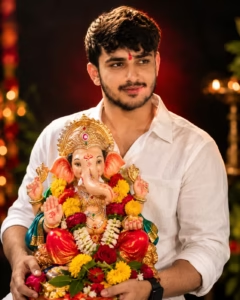
The four prompts below cover different Ganesh Chaturthi portrait ideas, including traditional Maharashtrian styling, Ganesha idols decorated with flowers and jewellery, copper Kalash elements, and a cinematic male devotional portrait.
What Makes a Ganesh Chaturthi AI Portrait Look Authentic?
Traditional festival photography works well because several visual elements naturally complement one another.
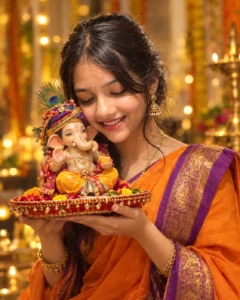
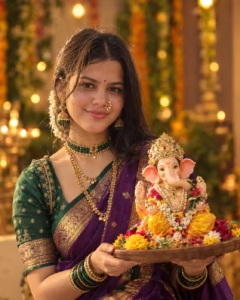
Rich saree colors, gold embroidery, Maharashtrian jewellery, flower garlands, brass or copper devotional objects, warm light, and festive surroundings can create an image that feels culturally connected rather than randomly decorated.
Lord Ganesha should also remain an important part of the composition rather than appearing as a minor background object. A natural interaction between the person and the idol can create a more personal devotional atmosphere. Pasted text
Ganesh Chaturthi AI Photo Editing Prompts
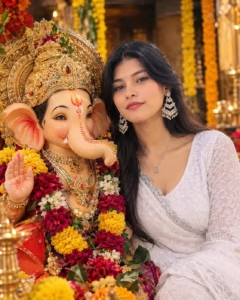
Prompt 1: Woman Cheek-to-Cheek with Lord Ganesha
How to Create a Ganesh Chaturthi AI Photo
Start with a clear photograph where your face is easy to see. A sharp, naturally lit portrait gives the AI more useful information about facial identity and appearance.
Open ChatGPT in a conversation that supports image creation or editing, upload your reference photo, and copy the prompt that matches the style you want.
Paste the prompt with the image and generate the result. Once the image is ready, inspect the face, clothing, jewellery, Lord Ganesha idol, flowers, hands, devotional objects, lighting, and background.
If something needs improvement, ask for a focused modification rather than changing the whole composition. The source workflow follows the same basic process: upload a clear image, paste the selected prompt, generate, review, and refine if required. Pasted text
Keep Lord Ganesha Central to the Composition
The Lord Ganesha idol should remain one of the strongest visual elements.
Details such as the Mukut, ornaments, garlands, colors, and facial craftsmanship should be clear enough to support the devotional theme. The source also recommends visually coordinating colors between the idol and the person’s clothing so the scene feels connected. Pasted text
At the same time, the idol should not overpower the portrait completely. The composition should show a meaningful interaction between the person and the devotional setting.
Why 4:5 Works Well for These Portraits
All four supplied concepts use or suit a portrait-oriented composition, and the source specifically recommends 4:5 for this style.
That format provides vertical space for the face, clothing, Lord Ganesha idol, Kalash, flowers, and surrounding decorations while remaining suitable for portrait-oriented social media posts. Pasted text
Common Mistakes to Avoid
Using a Poor Reference Photo
A blurry, dark, or heavily filtered photo makes it more difficult to preserve recognizable facial characteristics.
Adding Too Many Decorations
Flowers, jewellery, lamps, garlands, and devotional objects can strengthen the scene, but too many competing details can make the image visually crowded.
Changing the Face Too Much
When editing a personal reference photo, excessive facial reshaping works against the goal of identity preservation.
Ignoring Hands and Fingers
Hands, fingers, jewellery, and object interactions should be checked carefully because generated details can sometimes appear distorted.
Using Inconsistent Lighting
The person, idol, flowers, Kalash, and background should all appear to exist under the same lighting conditions.
Making the Background Too Busy
A few meaningful festive elements can create a stronger result than filling every part of the image with decorations.
Using the Wrong Aspect Ratio
Cropping can remove important details from the outfit, idol, or foreground objects. The source recommends 4:5 for these portrait compositions.
Frequently Asked Questions
What is a Ganesh Chaturthi AI photo edit?
It is an AI-created or AI-enhanced portrait that gives a reference photograph a Ganesh Chaturthi theme using elements such as Lord Ganesha, traditional clothing, flowers, jewellery, diyas, and festive decorations.
Can I use my own photo?
Yes. A clear personal portrait can be used as the reference when the image tool supports reference-based editing or generation.
How can I keep my face similar to the original?
Use a clear reference image and explicitly tell the image tool to preserve facial identity and natural features. Results can still vary between generations and tools.
Which saree colors work well?
The source suggests traditional shades such as maroon, red, green, purple, navy blue, and gold.
Why are marigolds and roses used?
Flowers help establish the festive atmosphere while adding color and visual detail to the devotional composition.
What aspect ratio should I use?
A 4:5 vertical ratio works well because it leaves enough room for the subject, Lord Ganesha idol, and decorations.
Can I change the festive background?
Yes. The source allows variations such as a home puja setting, decorated festive room, or a more colorful celebration environment.
Conclusion
A good Ganesh Chaturthi AI portrait should feel devotional, personal, and visually balanced rather than excessively edited.
Traditional clothing, Maharashtrian jewellery, Lord Ganesha, flower garlands, Kalash elements, and warm illumination can establish the festive theme, but realism still depends on natural facial features, believable textures, appropriate proportions, and consistent lighting.
The four prompts above preserve the different source concepts while giving you several visual directions—from an intimate cheek-to-cheek devotional portrait to detailed Maharashtrian saree compositions and a cinematic male Ganpati portrait.
Start with a clear reference image, keep the main devotional elements recognizable, and inspect the final face, hands, jewellery, clothing, idol, and decorations carefully before using the image
